The first confusion people hit is thinking that Chelsea boots and Oxford shoes are two versions of the same product. They are not. They come from different design briefs, sit at different formality levels, and do entirely different things for a wardrobe. Getting that wrong is what causes a first pair to feel slightly off after a few wears.
Here is what you actually need to know.
What makes a Chelsea boot different from everything else
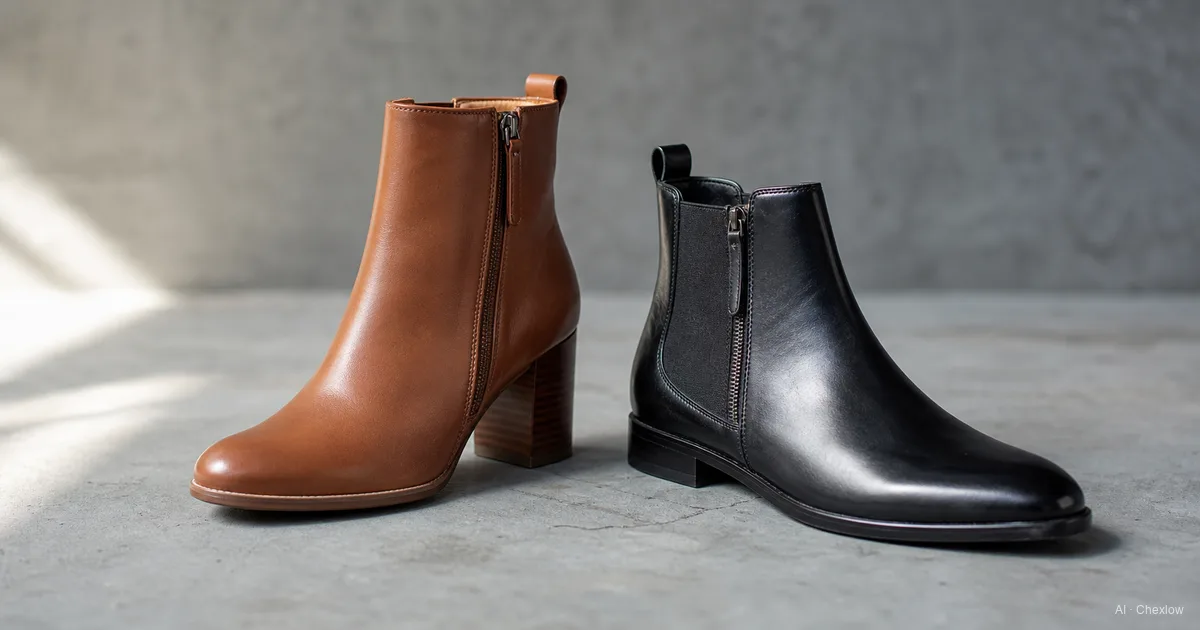
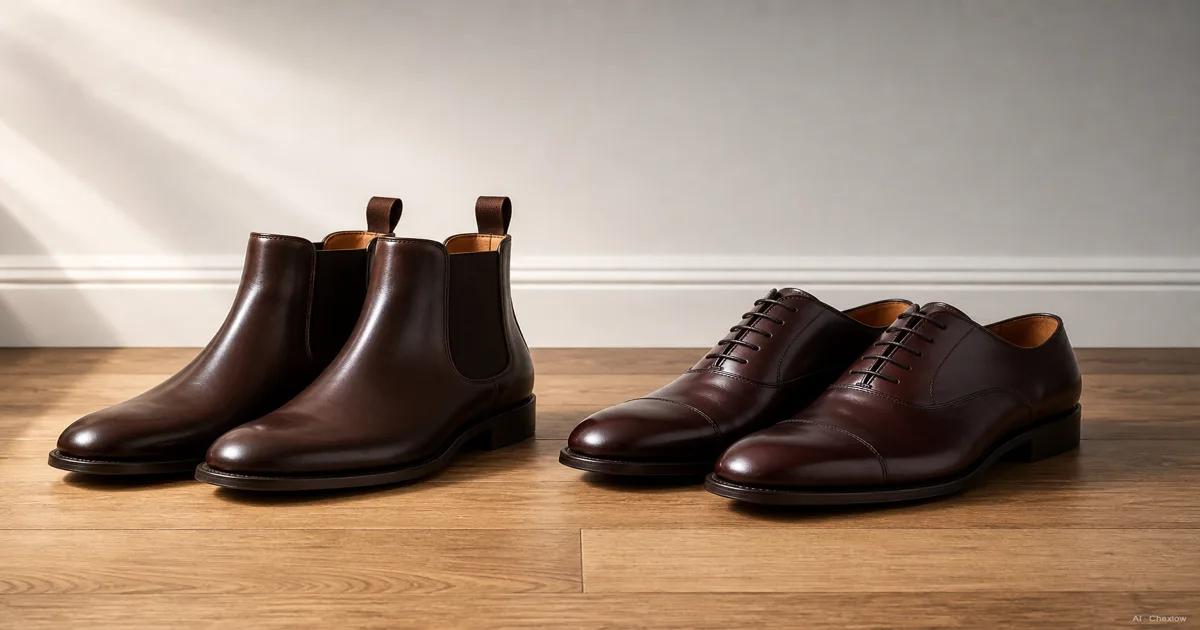
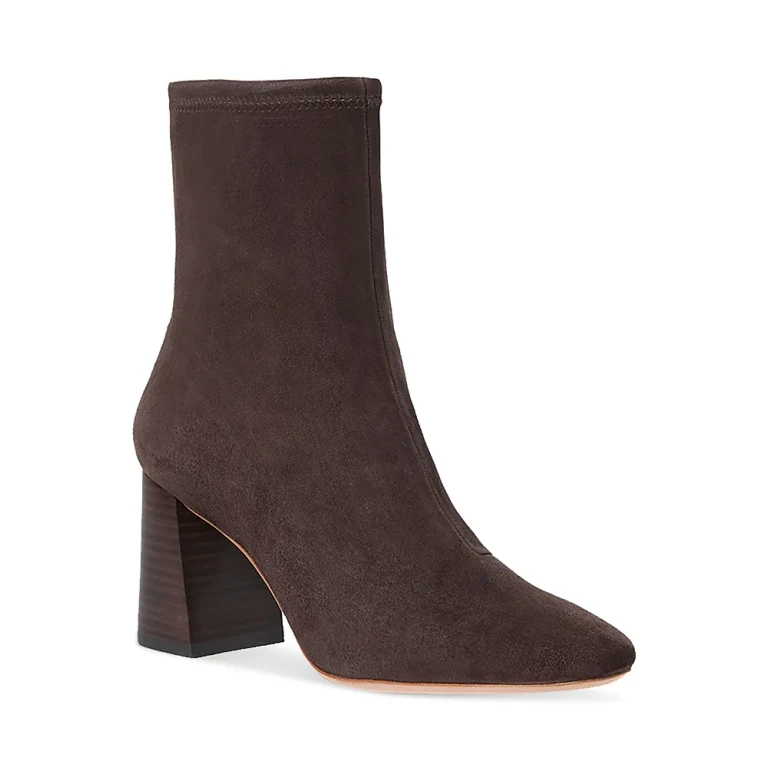
The Chelsea boot has a specific anatomy. It's an ankle-length boot made from two pieces of leather: the vamp (the front) and the quarters (the back). Where they meet on each side, there is an elasticated panel — sometimes called a gusset — that allows the boot to stretch as you pull it on and hold snugly once it's on. At the back, there's usually a small pull tab or loop of fabric to help with the motion.
That construction has been the same since the 1850s, when it appeared in London as a practical riding and walking boot (Chelsea boot, Wikipedia). The elastic panel is not decorative. It exists because the boot needs no zipper, no buckle, no laces. The stretch does all the work.
In practice, that matters more than it sounds. A Chelsea boot you can slip on without sitting down. A dress shoe requires two hands, a bench, and sometimes a shoehorn. If you're moving between different contexts in a day — office to dinner, commute to a meeting — the Chelsea boot is genuinely faster.
The one thing to check on quality: the elastic panel should sit flush with the leather when the boot is on your foot, with no gaping or puckering. If the panel bubbles outward, the boot either doesn't fit well or the panel quality is poor. That signal is worth catching before you buy.
Oxford vs Derby vs Chelsea, and where the formality actually falls
These three sit in a hierarchy that is worth understanding once, so you stop second-guessing it.
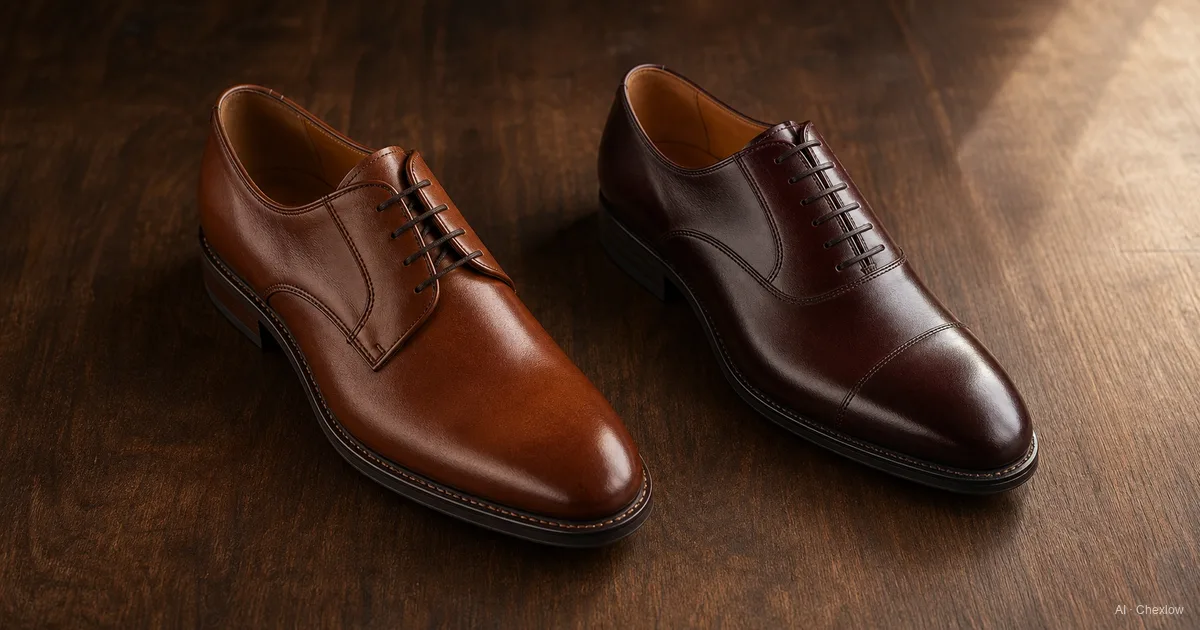
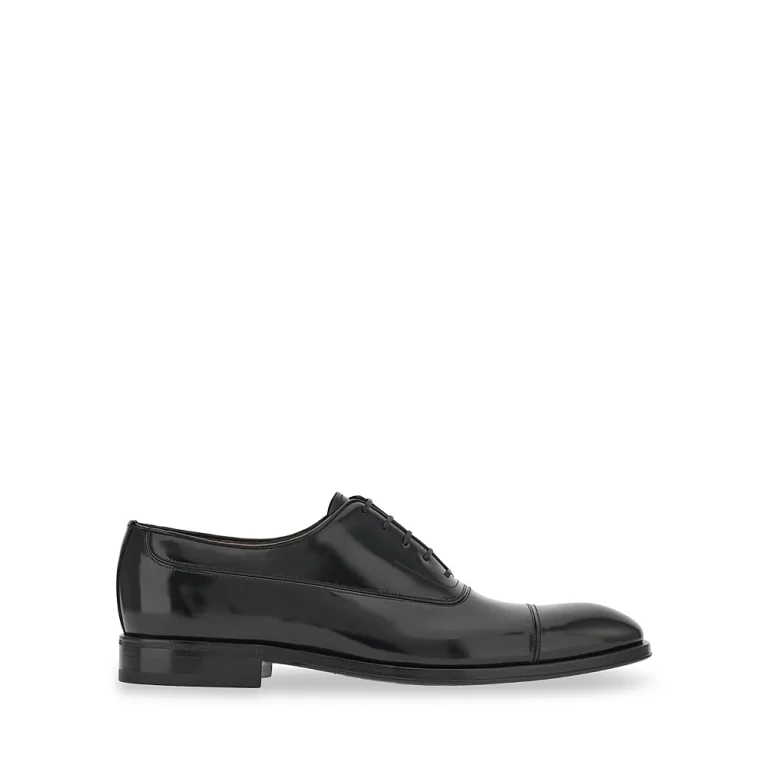
An Oxford has a closed lacing system. The eyelets are stitched underneath the vamp, so the sides of the shoe stay closed whether or not the laces are tight. That closed construction gives it a clean, seamless front view and places it at the top of the casual-to-formal spectrum for leather shoes. Black Oxfords work at black-tie adjacent events. Brown Oxfords work in conservative offices (Gentleman's Gazette, Oxford shoe guide).
A Derby shoe looks similar to an Oxford but has open lacing — the eyelets are stitched on top of the vamp rather than underneath, so the front opens slightly as you loosen the laces. Derby is one step below Oxford in formality and one step above Chelsea in most readings. It also accommodates a wider range of foot shapes because of that adjustable opening.
A Chelsea boot falls into smart casual territory. It doesn't compete with Oxfords at a formal dinner or a conservative workplace that expects dark lace-up shoes. But it crosses into business casual without effort — a well-made leather Chelsea boot in black or dark brown reads as polished from a distance. The range is roughly: dressed-down jeans through office chinos through a smart suit (Stridewise, Derby vs Oxford).
One practical note: if your work environment has a strict dress code specifying "dress shoes," ask whether Chelsea boots are permitted. In many European offices they are standard. In more conservative American or East Asian formal contexts, an Oxford or Derby is safer.
Rubber sole or leather sole for a first Chelsea boot
This is the question that comes up most often, and it has a clear answer for a first buy.
A leather sole signals a dress boot. It looks sharper, pairs more naturally with tailored trousers, and develops a patina over time that reinforces the formal register. The downside: it provides less grip, wears faster on hard pavement, and becomes treacherous on wet surfaces.
A rubber sole signals a casual boot. It grips better on wet stone and pavement, lasts longer for everyday city walking, and absorbs more impact during long days on your feet. It also costs less to replace or resole when it wears down (A. Hume outfitters, Chelsea boot buying guide).
For a first Chelsea boot that you plan to wear regularly — commuting, errands, casual to smart casual occasions — a rubber sole is the better starting point. The durability-to-formality trade-off favours rubber when you're not primarily buying for dress events. If you already own casual footwear and are specifically filling a smarter slot, the leather sole is the one to consider.
A middle option exists: many boots now come with a leather sole that has a small rubber insert at the heel and toe. This preserves most of the formal appearance while improving grip slightly. It's a reasonable compromise if you want to go for leather sole without sacrificing all traction.
When a Chelsea boot makes sense, and when Oxford or Derby is the right answer
Chelsea boots work well in a specific range of situations. Knowing that range helps you decide whether to buy them first or later.
The Chelsea boot does its best work when you need something that moves between casual and smart casual without requiring you to change shoes. Dark jeans with a Chelsea boot and a jacket covers a wider social range than the same outfit with a white sneaker or a heavy boot. Slim chinos, tailored trousers, midi skirts, and straight-cut trousers all pair naturally with the boot's silhouette. The outfit range that reads well: a dressed-down creative office, a dinner where you're not sure of the dress code, a weekend that starts at a café and might end at a bar.
Two situations where Chelsea boots fall short:
- Black-tie or very formal events. If the event requires a suit and tie as a minimum, an Oxford in black or dark brown is the stronger call. A Chelsea boot at a wedding or a formal dinner works in some contexts but reads as slightly underdressed in others.
- A workplace with explicit shoe requirements. Some conservative offices specify lace-up dress shoes. Chelsea boots are not lace-up, so they may not qualify regardless of how polished they look.
An Oxford or Derby makes more sense as your first buy if: you primarily need footwear for formal occasions, your workplace has traditional dress codes, or you already own casual footwear and are specifically filling the most formal slot (Nimble Made, men's dress shoe guide).
Conversely, a Chelsea boot makes more sense as your first buy if: you need footwear that covers casual and smart casual with one pair, you find lace-up shoes tedious in daily life, or your social occasions are mostly informal to business casual.
Break-in, heel height, and care
Neither Chelsea boots nor Oxfords arrive ready to wear for a full day. Both need a short break-in period, and understanding what to expect prevents the first week from feeling like a mistake.
Chelsea boots are typically stiff at the toe box initially. The leather needs a few wears to flex with the natural bend of your foot at the ball. Start with one to two hours on the first day, then increase gradually. Conditioning the leather before the first wear — with a standard leather conditioner or shoe cream — softens the fibres and shortens the break-in meaningfully (Wild Rhino Shoes, how to break in Chelsea boots).
Oxford shoes tend to be stiffer overall at first, particularly at the heel. The closed lacing also means there's less room for the foot to settle until the upper softens. The same graduated approach applies: short initial wears, rest between wears during the first week or two, and conditioner before first use.
Care for both types is essentially the same: brush off dirt after each wear, condition every month or two with a cream conditioner, use a polish only when you want to restore or deepen the colour. Cedar shoe trees slow moisture and help maintain shape between wears. Both Chelsea boots and Oxfords benefit from the same conditioning routine — the shoe form doesn't change the leather chemistry.
One note on heel height in Chelsea boots: they come in two main options. The flat Chelsea (also called the jodhpur heel or riding heel, roughly 2–3 cm) is the more casual option and works with a wider range of trousers. The Cuban heel (taller, 4–5 cm or more, usually with a slight taper) reads as more of a statement and pairs better with slim-cut trousers or jeans. For a first buy, the flat heel is more versatile.
Sources
- Chelsea boot, Wikipedia — boot anatomy, history, elastic panel construction
- Gentleman's Gazette, Oxford shoes guide — Oxford lacing construction, formality hierarchy
- Stridewise, Derby vs Oxford — Chelsea, Derby, Oxford formality comparison and smart-casual positioning
- A. Hume outfitters, Chelsea boot buying guide — rubber vs leather sole trade-offs for first buy
- Wild Rhino Shoes, how to break in Chelsea boots — break-in protocol and conditioner use before first wear