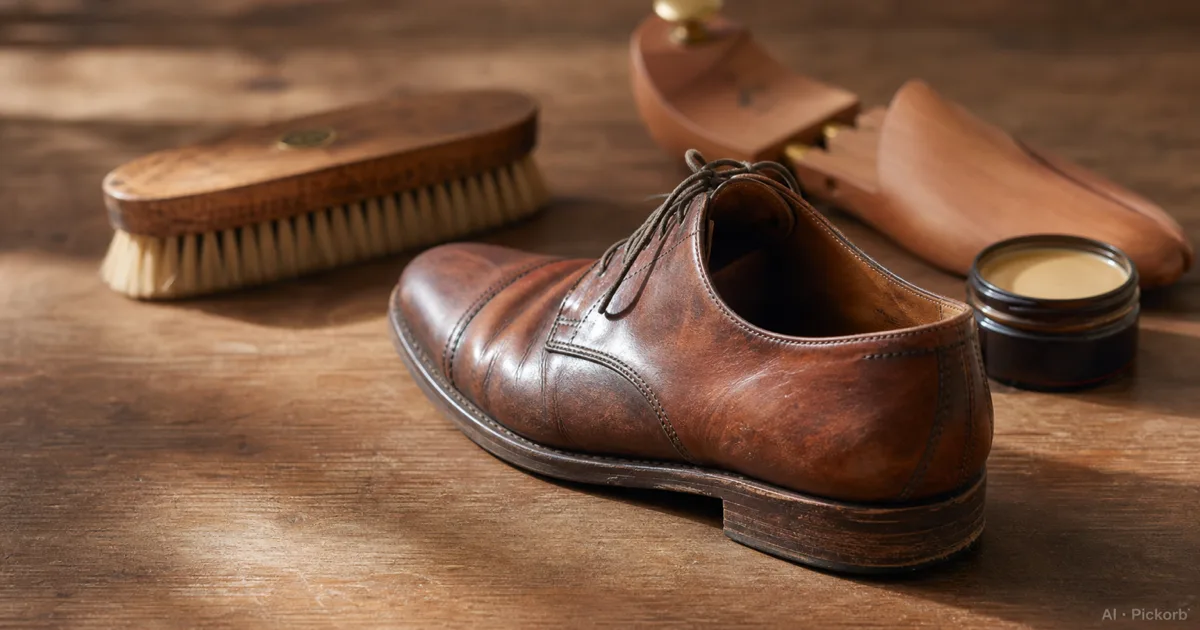
A leather shoe at the same price as another leather shoe can be two completely different things. One will quietly hold its shape, take a resole, and look better after three years of wear. The other will crack at the vamp by the second winter, lose the heel counter inside, and quietly retire to the back of the closet.
The difference almost never shows in the product photograph. It rarely shows in the marketing copy either, which usually focuses on the upper material and the style name and skips the construction.
It shows in five small details, all of which you can check in the store in under a minute. None of them require special tools. Once you know what to look for, the gap between a five-year shoe and a two-season shoe becomes visible at a glance.
1. The grain of the leather
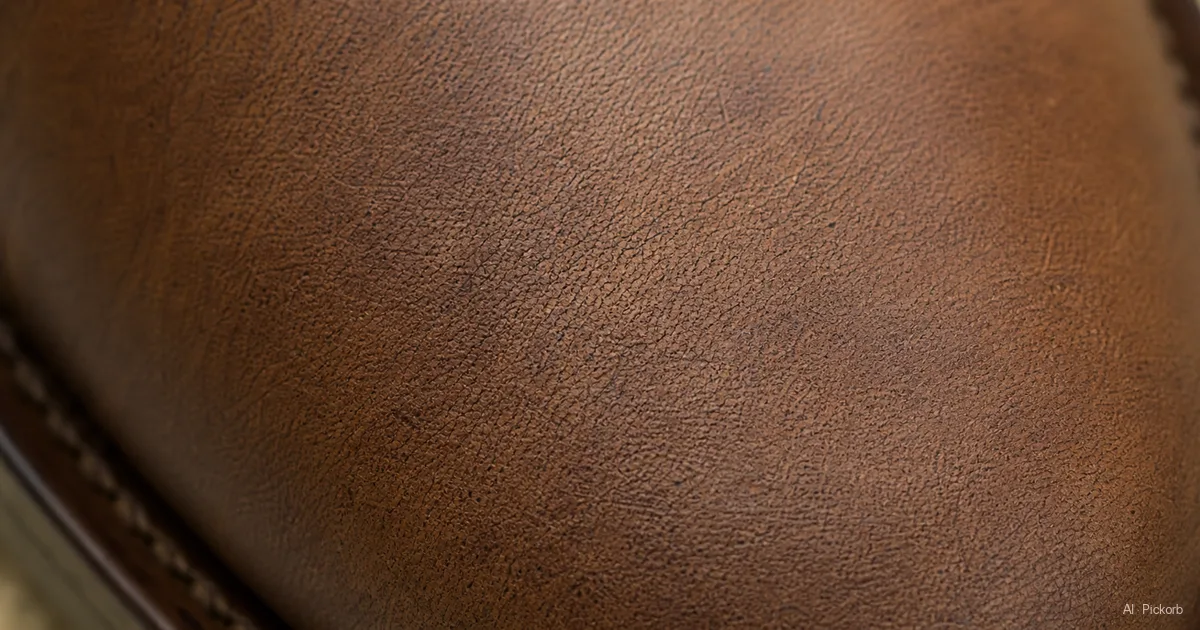
Look at the surface of the leather under indirect light.
Full-grain leather keeps the outermost layer of the hide intact. It has tiny pores, fine variation in tone across the panel, and small natural irregularities — a faint scar line, a slight unevenness in the grain pattern. It feels slightly textured under the fingertip, not glassy. With wear it darkens and develops a patina rather than fading.
Corrected-grain leather has had that outermost layer buffed away to remove imperfections, then re-coated with an artificial grain pattern. It looks perfectly uniform across the panel, has no visible pores, and feels glassy. It is sometimes called "genuine leather" on the label, which is the lowest grade name commonly used. Corrected-grain creases sharply rather than gently, and the artificial coating cracks at the crease lines after a year of wear.
Quick test: tilt the toe under a light. Real full-grain catches the light unevenly because of the natural texture. Corrected-grain catches the light in one flat sheet.
2. How the sole is attached
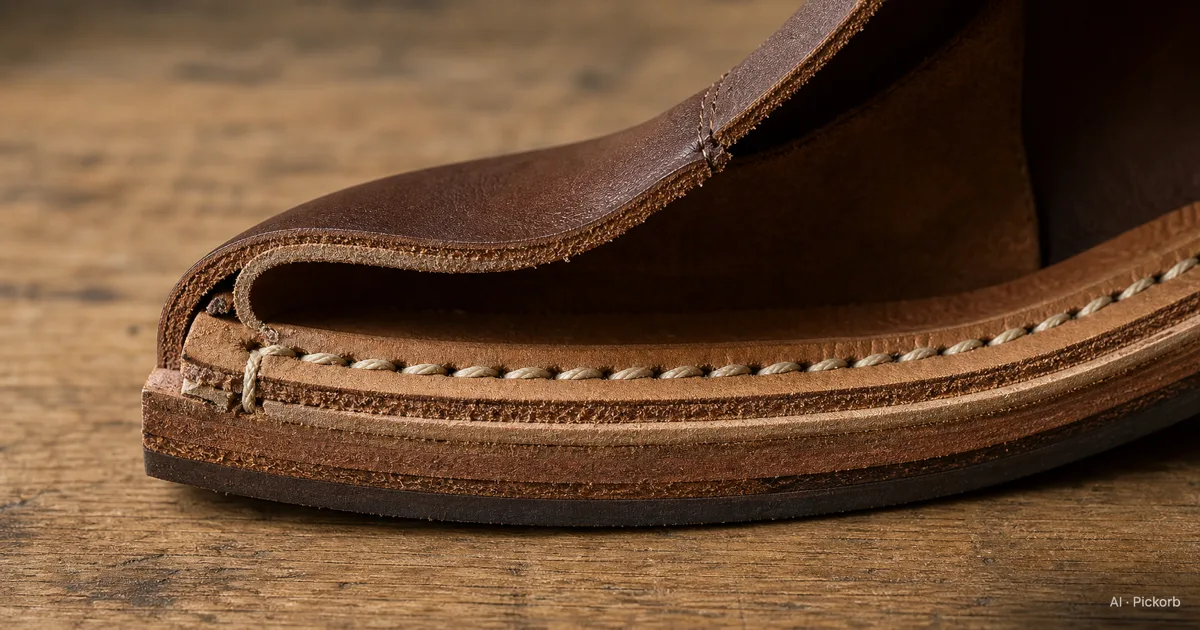
Turn the shoe over and look at the line where the upper meets the sole.
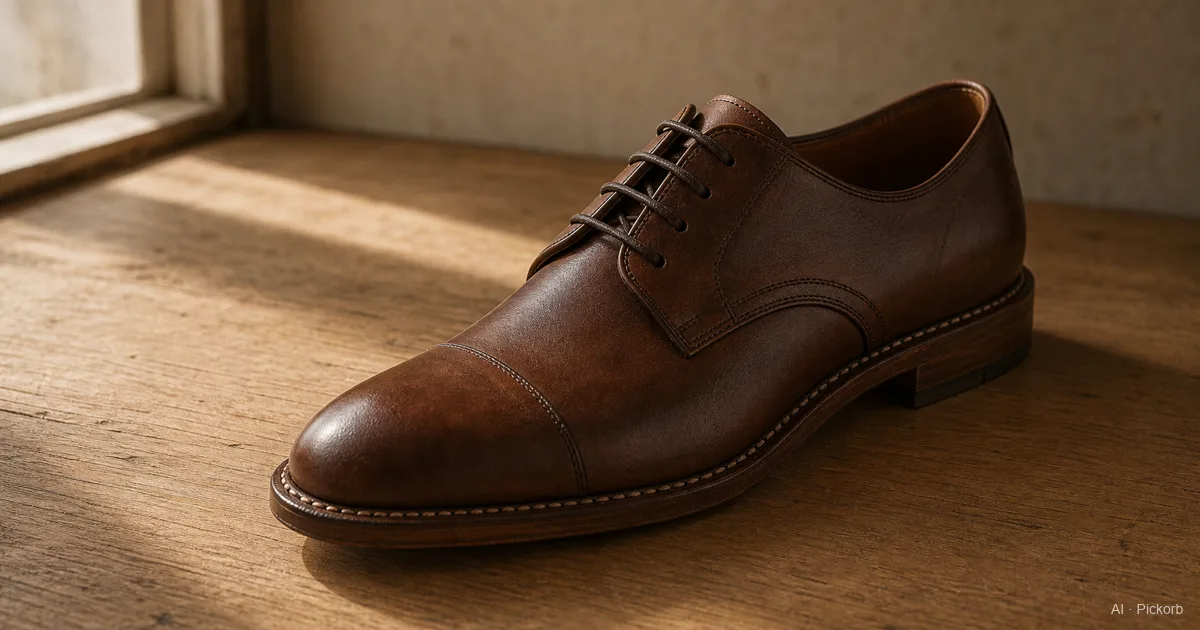
Goodyear welt. A thin strip of leather (the welt) is stitched along the perimeter between the upper and the sole. You can see the stitching line running around the outside of the shoe, about 3-5mm from the edge. Goodyear-welted shoes can be resoled multiple times by a cobbler — the cobbler removes the worn sole and stitches a new one onto the same welt without touching the upper. These shoes also tend to be more water-resistant, because the stitching sits outside the inner cavity of the shoe.
Blake stitch. A single line of stitching runs straight through the insole, the upper, and the outsole. From the inside of the shoe you can see the stitch on the footbed. Blake-stitched shoes can be resoled, but it is more delicate work and the cobbler needs a special Blake-stitch machine, which not every shop has.
Cement (glued). No visible stitching anywhere along the sole-upper joint. The sole is glued to the upper with an adhesive. Cemented shoes cannot be resoled in a meaningful way — when the sole wears through, the shoe is essentially done.
At the same price point, Goodyear is the most repair-friendly, then Blake, then cement. A cemented shoe is not automatically a bad shoe (sneakers are nearly all cemented), but if you are spending real money on a dress shoe and the construction is cement, the price is doing something other than buying you durability.
3. The stitching density and straightness
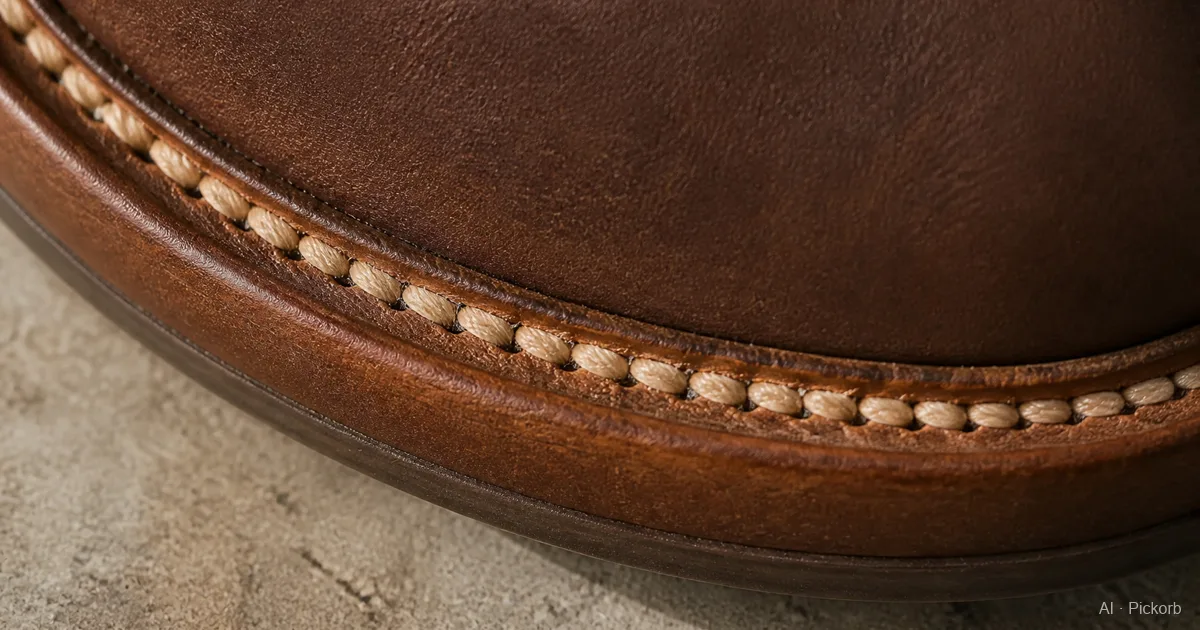
With the shoe still upside down, look at the stitching itself.
Count the stitches in a 1-inch (25mm) stretch of the visible sole/welt stitch. A factory-made fine shoe will often sit around 8-10 stitches per inch there. An entry-level dressed-up shoe will be around 5-6 stitches per inch, with visibly looser, longer stitches. Higher SPI usually means tighter, more skilled work, up to a point: beyond a certain density the leather itself can weaken (Selecting the right SPI, AMEFIRD).
The straightness matters at least as much as the density. The line should run parallel to the edge of the sole all the way around, without dipping in or wobbling out. A wobbly stitch line on the welt usually means the rest of the construction was rushed too.
Quick test: run your finger along the welt and watch the stitch line follow the curve of the toe. Smooth, even spacing on a tight curve is the marker of a well-trained welt operator.
4. The lining
Slide your hand inside the shoe and feel the lining against your fingers.
A well-made dress shoe is fully lined in leather — usually a softer calf or kid lining. You can identify leather lining by the slightly grainy, breathable feel and the way it warms to your hand within a second or two. It also has a faint natural leather smell.
Synthetic lining feels glassy and stays cool against your skin. It doesn't breathe, which means the inside of the shoe stays damp longer after wear, which is one of the main reasons cheap leather shoes start smelling.
A partial lining (leather only at the heel and quarter, fabric or synthetic elsewhere) is a middle path. Some sneakers and casual styles do this on purpose for weight; on a dress shoe it is usually a cost-cutting move.
Quick test: look at the back of the heel inside the shoe. If the lining there is a different color and texture from the upper, it is usually leather. If everything is one uniform glassy material, it is usually synthetic.
5. The heel counter and toe box
Press your thumb hard into the back of the heel (the heel counter) and into the toe (the toe box).
Both should feel solid — there is a piece of stiffened material (usually a leather "puff" or a thermoplastic insert) glued between the lining and the upper to hold the shape. A well-made shoe will resist your thumb pressure and snap back to shape immediately when you let go.
A poorly built shoe will give under your thumb and stay slightly dented. Once a heel counter goes soft, the shoe loses its hold around the back of the foot and starts gapping at every step. Once a toe box collapses, the upper folds inward and the front of the shoe gets creased lines that never come out.
Quick test: with the shoe empty, push down on the back of the heel and on the toe. If either feels like a stiff card that bounces back, the shoe was built around real structure. If either feels like fabric folded over fabric, the structure is missing.
What the five checks add up to
No single check rules a shoe out. A cemented sneaker with a synthetic lining is exactly what a sneaker should be. A corrected-grain leather can still be a usable casual shoe at the right price.
The five checks matter together when the price says "real shoe." If you are looking at a dress shoe at a price that should buy you durability and repair-friendly construction, then full-grain leather, Goodyear or Blake stitching, tight even stitches, leather lining, and solid counters are what that money is supposed to be paying for. If two or three of the five are missing at that price, the maker has saved money somewhere you will notice in eighteen months.
Run the five checks in store before you decide. They take about a minute combined, and they are the difference between a five-year shoe and a two-season one.
Sources
- Shoe construction methods, Shoegazing — Goodyear welt, Blake stitch, cement (glued) construction differences
- Selecting the right SPI, AMEFIRD — stitches per inch as a quality indicator, density vs strength tradeoff
- Toe puff and heel counter, Secret Cobbler — stiffener materials between lining and upper, structural role
How this guide was built
This piece is a cross-brand checklist rather than a brand-specific guide. The construction terms (full-grain, corrected grain, Goodyear welt, Blake stitch, cement, SPI, heel counter, toe box) come from established shoemaking references — the Wikipedia entries on shoe construction, Shoegazing's construction guides, and the AMEFIRD technical bulletin on stitches per inch. The five checks listed here are the ones a buyer can run in roughly a minute in store, not the deeper construction details a cordwainer would inspect.
Chexlow topic editor · AI illustration disclosed in image alt text