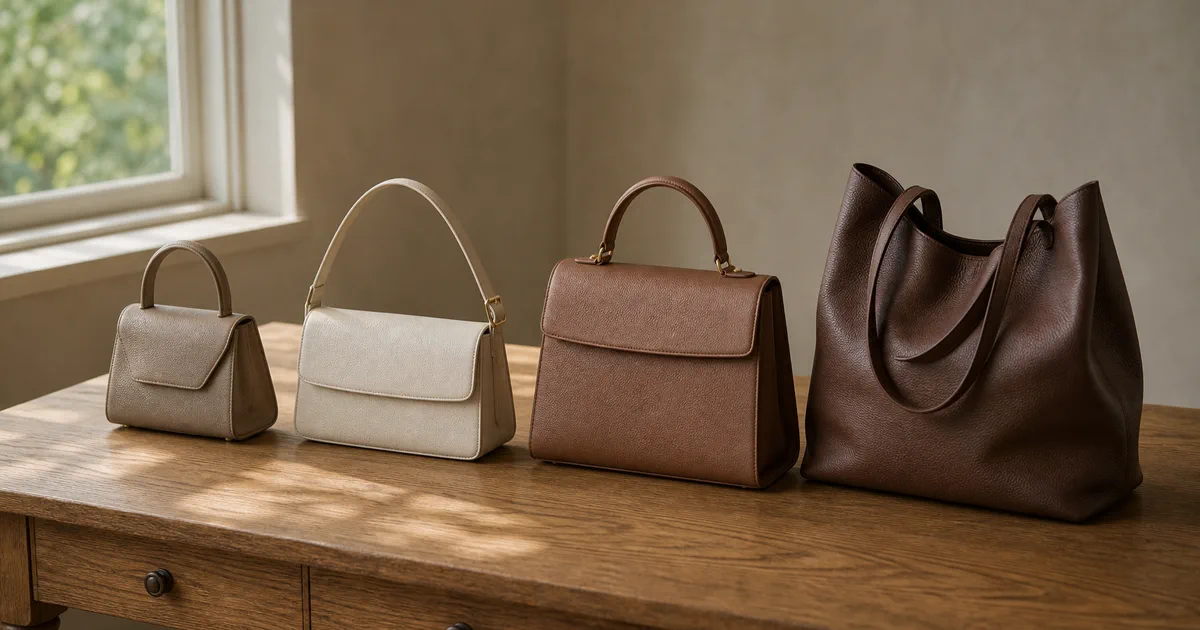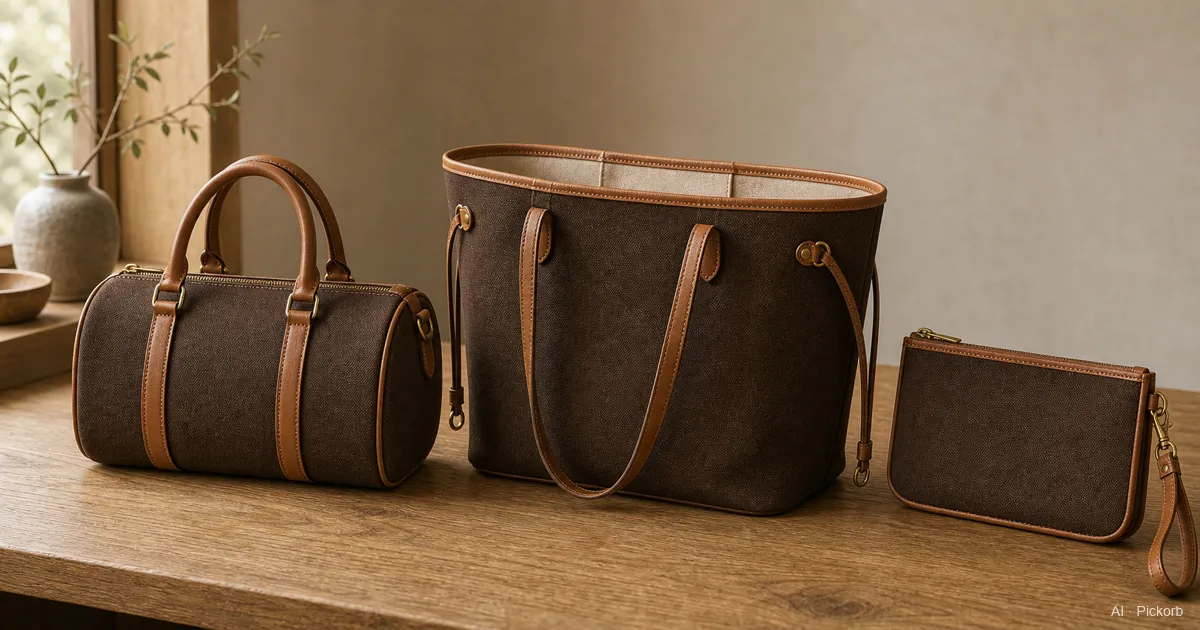
Walk into Louis Vuitton for the first time and you'll probably feel the same hesitation everyone does. The Speedy, the Neverfull, and the Pochette Accessoires sit close together in the imagination: same monogram canvas, same gold-tinted hardware, same set of references. At a glance they read as three versions of the same idea.
They really aren't.
Each one was drawn for a completely different problem, decades apart, by different hands. Treating them as interchangeable is the easiest way to end up with a first Louis Vuitton that feels slightly off after a few outings. It usually shows up around the third or fourth wear, when the rest of your wardrobe starts disagreeing with the bag.
Here's the simpler version. The Speedy is the structured city handbag that started in 1930 as a smaller take on the Keepall. The Neverfull is the open-top tote from 2007, built to be the one bag that does everything. The Pochette Accessoires is the small clutch that began in 1992 as an accessory inside the Bucket bag and grew into the entry-level monogram piece most first-time buyers actually reach for. Once that clicks, the choice gets a lot easier.
Where each one came from
The Speedy launched in 1930 under the name "Express", a smaller, city-scaled interpretation of the Keepall, Louis Vuitton's larger duffle-style travel bag introduced in 1924 (Louis Vuitton Speedy, Sotheby's). The bag was first released in plain canvas, then re-issued in the now-iconic Monogram canvas almost immediately after.
The Speedy's defining moment came in 1965. Audrey Hepburn, then at the height of her career, asked Louis Vuitton to scale the Speedy down to better suit her petite frame, which led to the launch of the Speedy 25 (Louis Vuitton Speedy, Sotheby's). Once it went on general sale, the 25 quickly became one of the most popular sizes, and it's still the size most first-time Speedy buyers consider today.
The Neverfull arrived almost eight decades later, in 2007, during Marc Jacobs's tenure as creative director (Louis Vuitton Neverfull, Sotheby's). It was initially conceived as a seasonal beach bag, and the starting idea was unusually open-ended: an everyday tote with the side laces, the open top, and the reversible body that could change shape with the day. It was created in part to rival the Goyard Saint-Louis tote, and within a few seasons it had overtaken its reference point in demand.
The Pochette Accessoires sits between the Speedy and the Neverfull by launch date, even though it reads as the newest. It was introduced in 1992 as a small accessory pouch attached to the inside of the Bucket bag, before being released as a standalone in its own right (Louis Vuitton Pochette Accessoires, Fashionphile). The shape has barely changed since: a flat monogram canvas clutch with a short strap. Its current incarnation comes with a removable leather strap and a removable gold-tone chain so it can read as a clutch, a shoulder bag, or a small crossbody depending on the day.
The monogram canvas the three bags share is itself older than any of them. Georges Vuitton designed the Monogram pattern in 1896, drawing on Neo-Gothic art and the influence of the Vuitton family's Asnières home (Louis Vuitton Monogram, Louis Vuitton). Three bags, the same 130-year-old canvas, three different problems.
Speedy: the structured city handbag that started everything
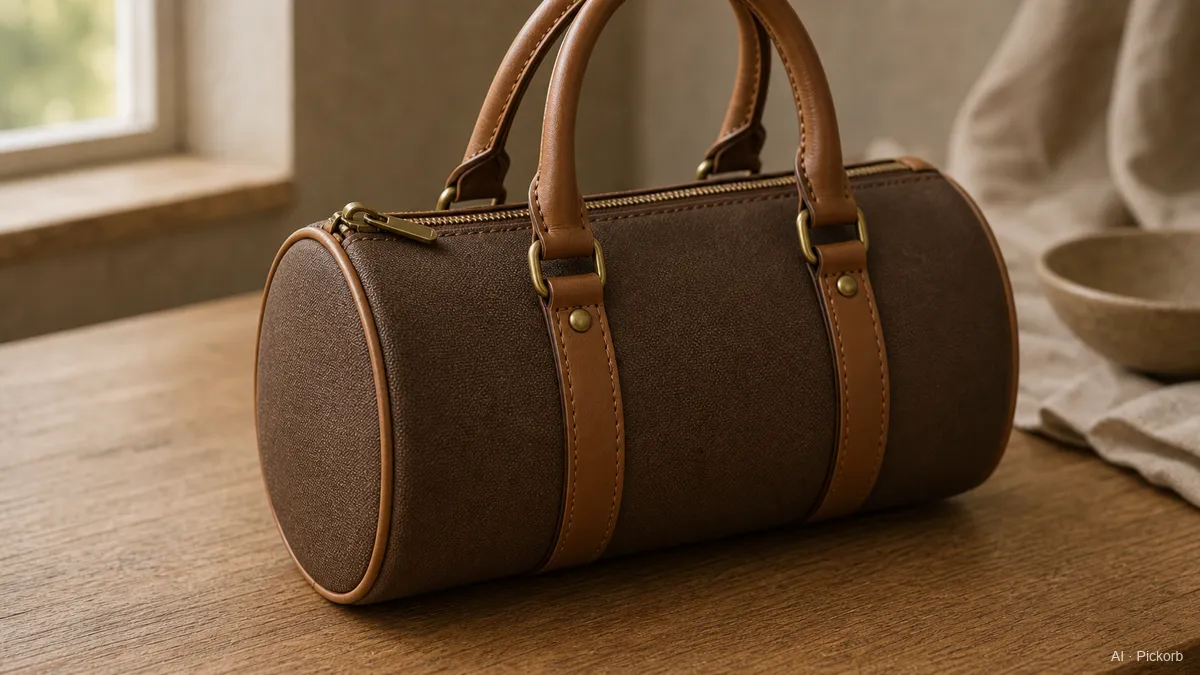
The Speedy sits in a very specific slot. It's a structured top-handle bag with a softly rounded body, two rolled handles, and a top zip closure. Two carrying formats exist and they really do read differently: the original Speedy (top handles only) and the Speedy Bandoulière, introduced in 2011 with an added removable shoulder strap so the same silhouette can also work cross-body.
You'll find it pairs naturally with denim, mid-length dresses, and anything in the casual-tailored middle. Two situations where it's not the first choice:
- Heavy commute days. The classic two-handle Speedy isn't built to be a laptop bag. The Bandoulière partially solves this, but a tote is still better.
- Strictly formal occasions. The Speedy reads casual-luxury more than evening; for a dinner-and-event closet, it isn't the right gap to fill.
The Chexlow selection tends to surface Speedy 25 and Speedy 30 in Monogram canvas, along with the Damier Ebene and Damier Azur variants, and the Bandoulière versions across both sizes. If a closet already has soft pouches and totes but no structured top-handle handbag, this is the gap to fill. If you already own a small structured bag, the Speedy still doesn't duplicate it. The monogram canvas reads differently in a wardrobe than smooth leather does.
One thing worth knowing: the Speedy 25 is the version most often recommended as a first Speedy. It holds its shape, it's the size Audrey Hepburn asked for in 1965, and it sits between the slightly small Speedy 20 (which reads more like a top-handle clutch) and the more utility-leaning Speedy 30.
Neverfull: the open-top tote built to do everything
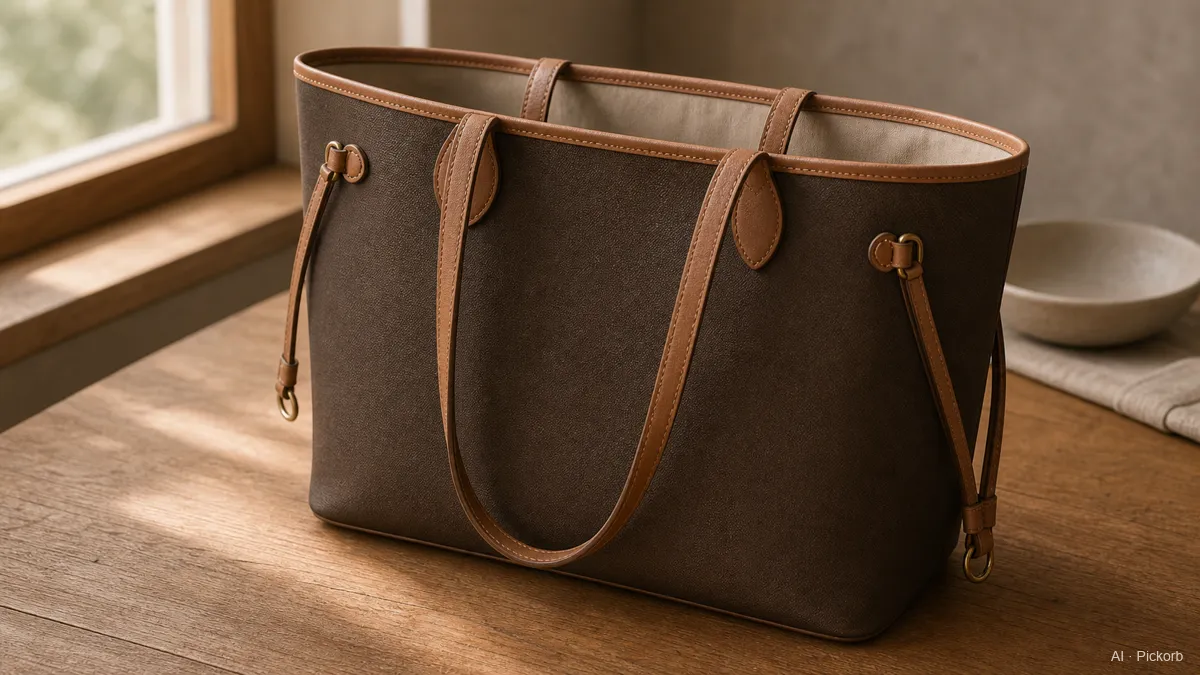
The Neverfull works the other way around from the Speedy. It's intentionally simple. An open-top body, two flat shoulder straps long enough to sit on the shoulder over a coat, side laces that cinch in to change the silhouette, and a removable inner pouch on a strap. The whole thing was designed to be lived with day-to-day rather than carried for an occasion.
Structurally a Neverfull is closer to a beach tote with monogram canvas hardware than to a formal handbag scaled up. The open top swallows a laptop sleeve, a thin notebook, a water bottle, and a small wallet without bulging. The side laces let it read as a slimmer everyday tote when cinched and a more generous carry-all when loose.
That's actually useful to know when you're deciding. A Neverfull behaves in a wardrobe the way a well-made canvas tote does. It works between dress and casual, it ages with visible wear at the corners and along the leather trim, and it pairs with most things from tailored trousers to denim. The monogram canvas is what makes it read specifically as Louis Vuitton at a distance.
For a closet that already has a structured Speedy slot, the Neverfull doesn't duplicate. It fills the daily-carry position, with much more capacity. For a closet built around small clutches and shoulder bags, the Neverfull is a category addition that asks the rest of the wardrobe to catch up. That's worth being honest about.
The Neverfull MM is the most common first-Neverfull pick. It fits a laptop sleeve and a notebook without folding, and it sits in proportion on most frames. The PM is the dressier size and reads more like a small tote; the GM starts to look like luggage and is the one most often used as a travel bag.
Pochette Accessoires: the small monogram clutch that doesn't ask for anything
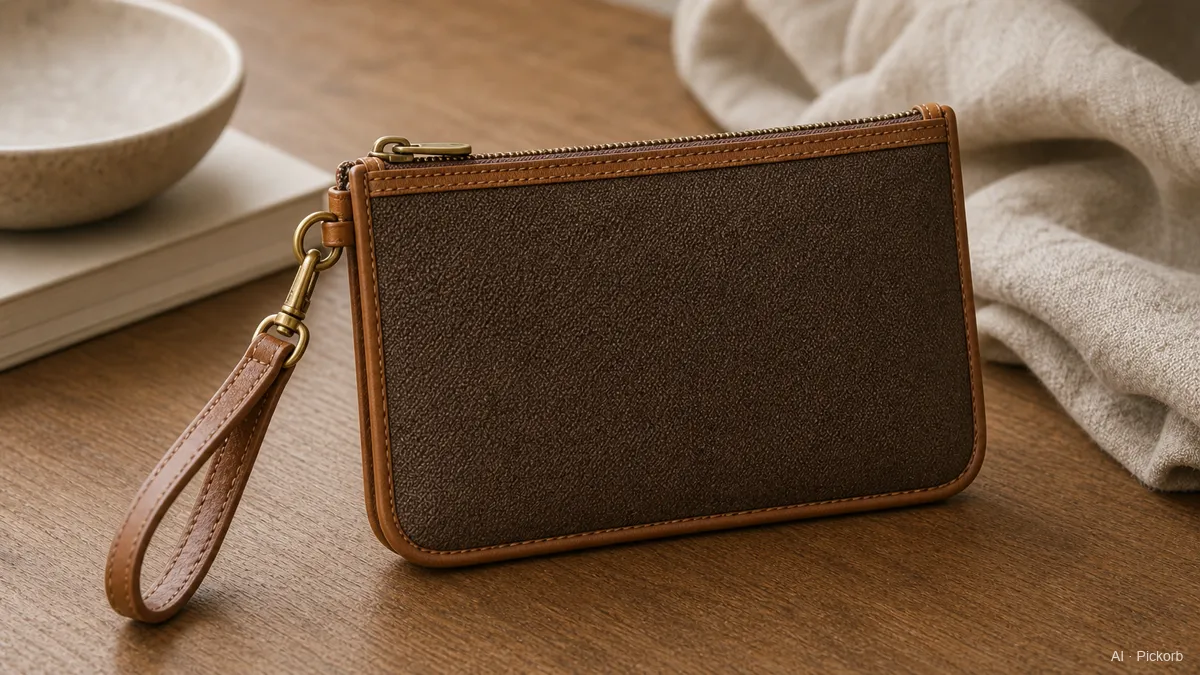
The Pochette Accessoires is the easiest of the three to live with, partly because it's the smallest and partly because it is the lowest-priced of these three routes into monogram canvas. It's a flat monogram canvas clutch, about 23.5 cm wide and 13.5 cm tall, with a removable leather strap and a removable gold-tone chain so the same bag can read as a hand clutch, a shoulder bag, or a small crossbody depending on which strap is on.
It started life in 1992 as an accessory pouch attached inside the Bucket bag, then was released on its own and became one of the brand's most consistent small leather goods over the next three decades (Louis Vuitton Pochette Accessoires, Fashionphile). On the Louis Vuitton US site, the Pochette Accessoires Monogram sits clearly below the Speedy and Neverfull tiers, although the exact retail price changes over time.
Two situations the Pochette handles well that the other two don't:
- Going out at night. The flat silhouette tucks under an arm cleanly, and the chain strap lets it sit on the shoulder when the table fills up.
- A second bag inside another bag. Many people who already own a Neverfull or a Speedy carry the Pochette inside it as a wallet-and-essentials organizer, then pull it out for short evening outings.
Two situations where it falls short:
- A real working day. It genuinely doesn't fit a laptop, a notebook, and a water bottle. It's a clutch, not a tote.
- As the only Louis Vuitton in a wardrobe that needs structure. The flat shape goes a little soft next to a sharp tailored coat. The Speedy is the better single piece for that closet.
For a closet that's looking for the lowest price step among these three monogram canvas bags, this is often the most honest first choice. It doesn't ask the rest of the wardrobe to formalize, and the entry price tends to sit clearly below the Speedy and Neverfull tiers while still reading unmistakably as Louis Vuitton.
Three things that show up after a season of carrying each
Once you've lived with each one for a season, three differences make the choice obvious in retrospect:
- Carrying posture. Speedy sits in the hand or in the crook of the arm, Neverfull lives on the shoulder over a coat or open on a desk, Pochette slides under the arm or onto the shoulder with the chain. They genuinely don't compete for the same gesture.
- Maintenance. The Speedy's vachetta leather handles patina visibly over the first year. That's expected, and it's part of the bag's character. The Neverfull's flat leather trim shows scuffs at the corners first. The Pochette's vachetta piping shows water marks the fastest because there's so little of it.
- Resale. All three hold value, but Neverfull and Speedy have the deepest secondary market. The Pochette has a steady aftermarket too, particularly limited-edition prints, but its ceiling is lower because the entry price is lower.
So which one first?
Honestly, it usually comes down to one question: which slot in your closet is actually empty?
- No structured top-handle bag, a wardrobe with denim and casual-tailored pieces: Speedy is the first piece.
- No everyday open tote that still reads polished and has real capacity: Neverfull is the first piece.
- Looking for an entry into monogram canvas at the lowest price tier, with the option to carry it three ways: Pochette is the first piece.
The misstep most first-Louis Vuitton buyers make is trying to make a single piece cover all three needs. It rarely works out. People who end up owning more than one tend to start with whichever one fills the bigger wardrobe gap, then add a second a season or two later once the first has settled in.
Sources
- Louis Vuitton Speedy: A Century's Most Coveted Handbag, Sotheby's: 1930 launch as "Express", smaller take on the 1924 Keepall, 1965 Audrey Hepburn request that introduced the Speedy 25.
- Louis Vuitton Neverfull: The Tote That is Truly Never Full, Sotheby's: 2007 launch, original beach-bag idea, rivalry with the Goyard Saint-Louis tote.
- A Deep Dive into the Louis Vuitton Pochette Accessories, Fashionphile: 1992 introduction as an accessory inside the Bucket bag, evolution into a standalone piece.
- Louis Vuitton Monogram, Louis Vuitton: 1896 Monogram canvas designed by Georges Vuitton, with Neo-Gothic art and the Asnières family home cited as influences.
How this guide was built
This piece started from a recurring question among first-time Louis Vuitton buyers: which of the iconic monogram canvas pieces, the Speedy, the Neverfull, or the Pochette Accessoires, should be the first one in the closet. We pulled the design context for each from the Sotheby's editorial on the Speedy and the Neverfull, Fashionphile's deep dive on the Pochette Accessoires, and Louis Vuitton's official Monogram page for the 1896 canvas. The recommendations sit on the Louis Vuitton pieces Chexlow currently surfaces from partner merchants, so the framing reflects what a reader can actually act on rather than the brand's full archive.
Chexlow topic editor · AI illustration disclosed in image alt text