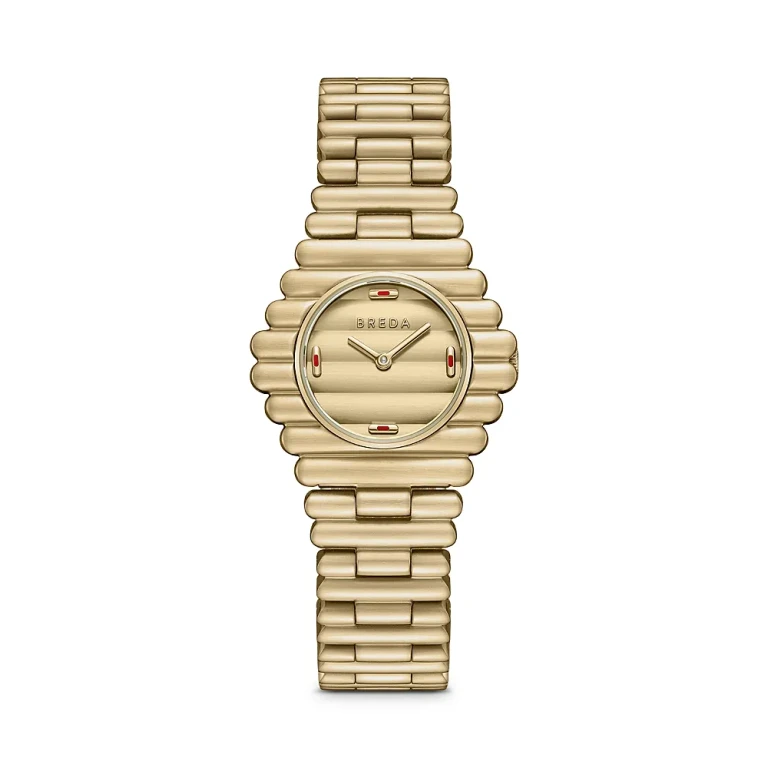
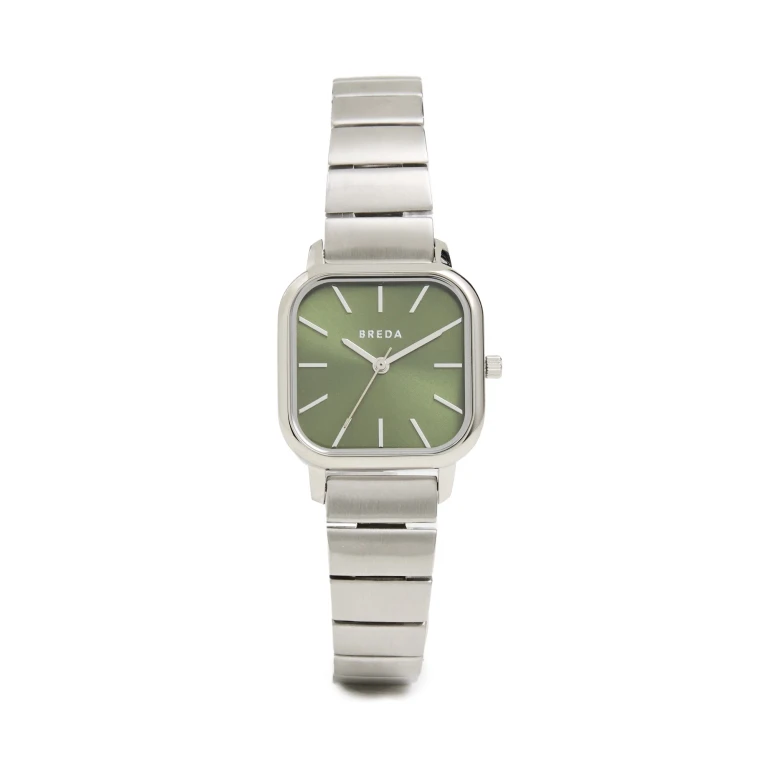
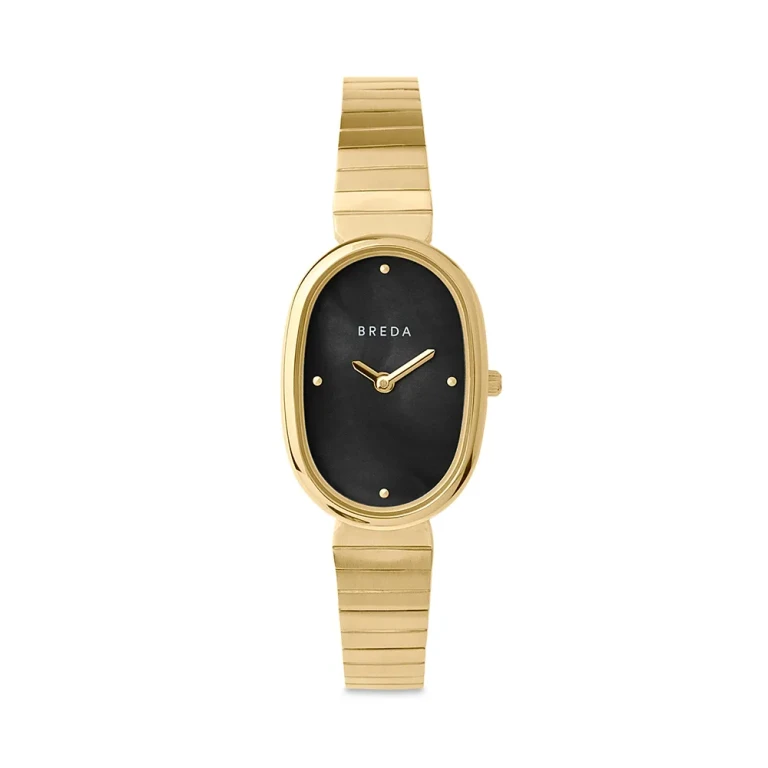
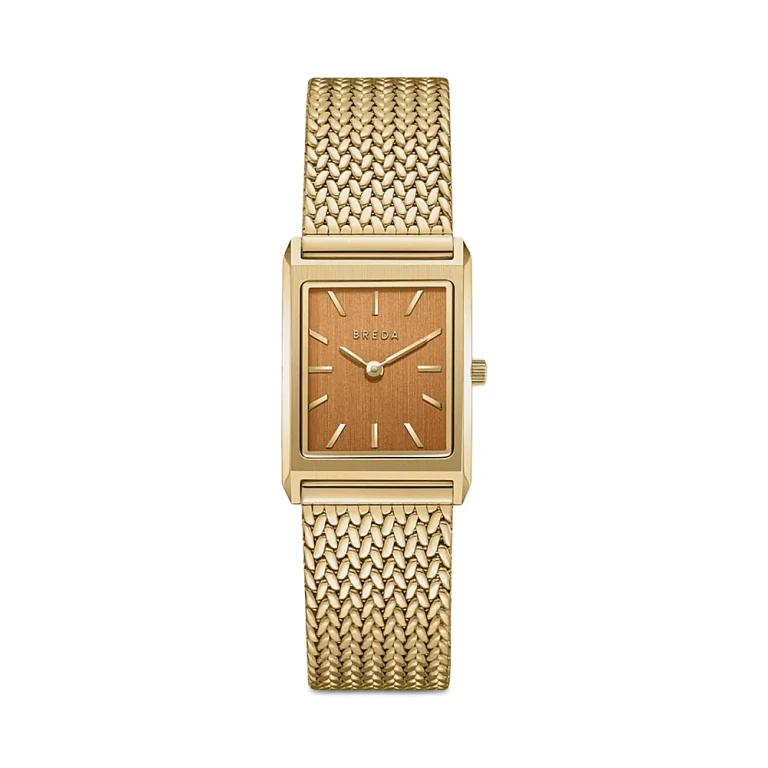
The single most common watch buying mistake is also the easiest to avoid. Most people choose a case size from the product photo, see a number like "42mm" in the description, and decide based on that. By the time the watch lands, it overhangs the wrist by a centimeter on each side, or the opposite — it looks lost on the wrist next to the sleeve.
The reason is that case diameter is only one of three numbers that decide whether the watch actually fits. The other two — lug-to-lug and thickness — determine whether the watch sits comfortably or visually takes over.
Once you know which numbers to compare, the right case size becomes far less of a guess.
1. Measure the wrist first
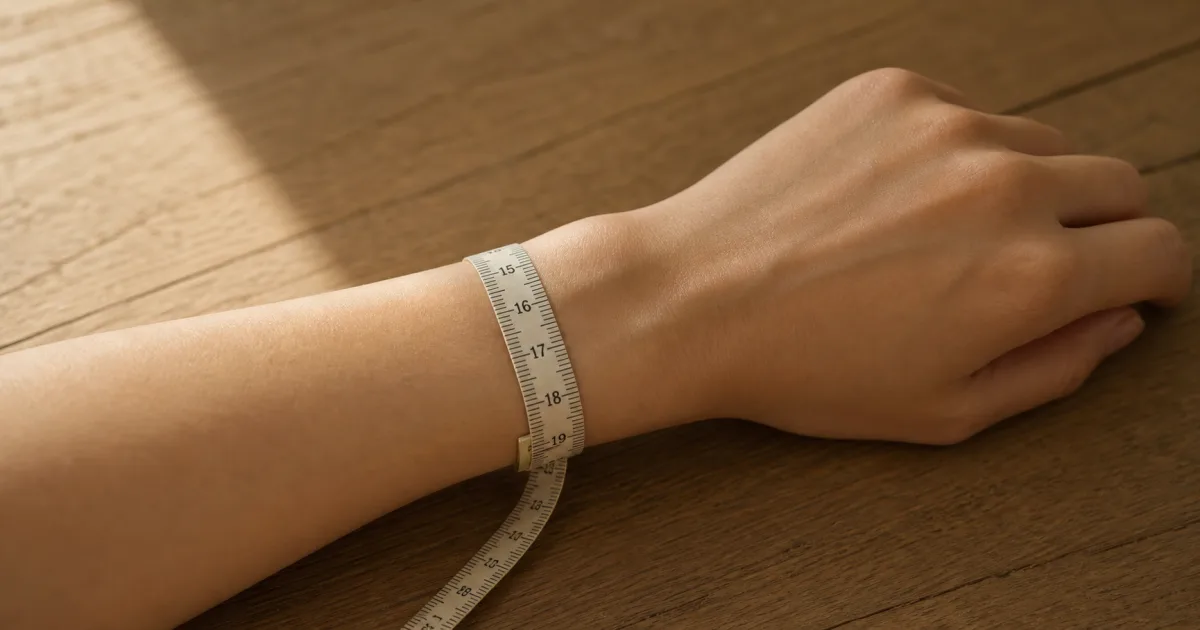
Take a flexible measuring tape (or a strip of paper and a ruler) and wrap it once, snug but not tight, around your wrist just behind the wrist bone, where a watch would naturally sit.
Use centimeters; it is the unit watch makers think in. Inches work too, but expect to convert.
Rough wrist categories:
- Under 16 cm (6.3"). Small wrist. Best in 36-38mm case range.
- 16-17 cm (6.3-6.7"). Small-medium wrist. 36-40mm range.
- 17-18 cm (6.7-7.1"). Medium wrist. 38-42mm range works.
- 18-19 cm (7.1-7.5"). Medium-large wrist. 40-44mm range.
- Over 19 cm (7.5"+). Larger wrist. 42mm and above sits naturally.
These are ranges, not rules. A small wrist can wear a larger sport watch deliberately; a larger wrist can wear a smaller dress watch on purpose. The ranges are where the watch sits by default without overhang or looking too small.
2. The case diameter
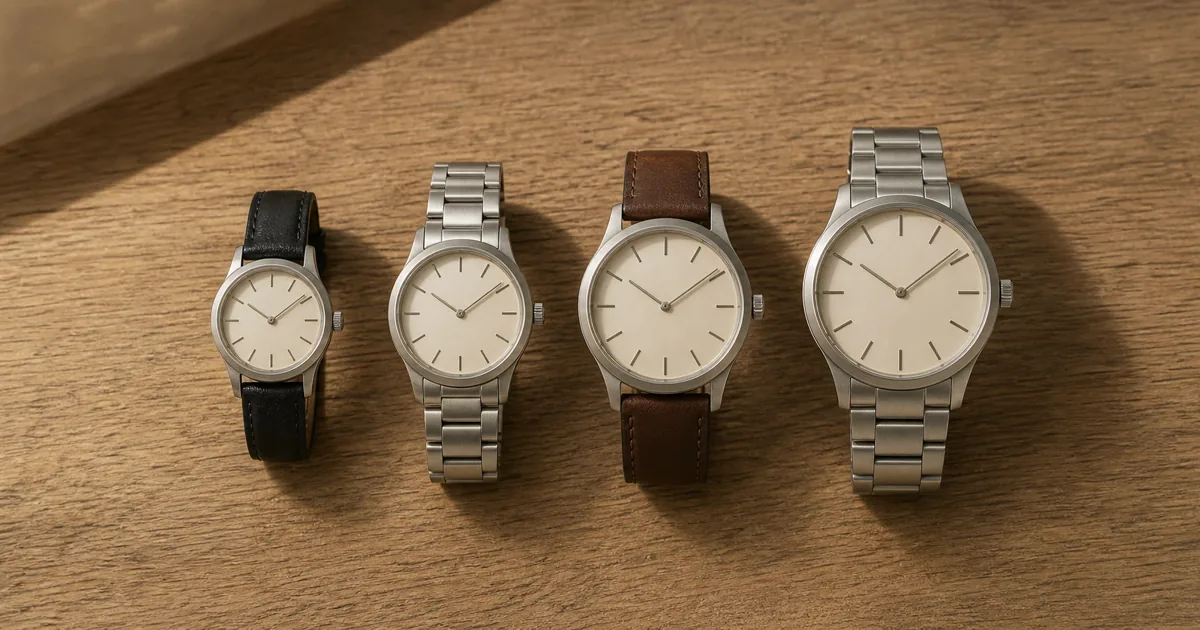
Case diameter is the distance across the dial side of the watch, excluding the crown.
36mm. A dress and classical-leaning size. On a small to small-medium wrist (under 17 cm), 36mm reads as proportionate and refined. On a wrist over 18 cm, the same case reads as deliberately small — which is a style choice some make for dress watches and vintage references like the Rolex Datejust 36 or Cartier Tank.
38mm. The most flexible size for small-medium wrists (16-17 cm). Reads modern but not aggressive. The size that newer dress and sport watches gravitate toward as a default for smaller and average wrists.
40mm. The most common modern case size, especially for sport watches. Reads balanced on medium wrists (17-18 cm). At this size, many contemporary signature models (Rolex Submariner 40, Omega Seamaster 41, IWC Mark XX 40) sit close to the center of their modern range.
42mm. Larger sport watch size. Reads strong on medium-large wrists (18-19 cm). Below 17 cm, 42mm starts overhanging. Above 19 cm, 42mm reads as the natural everyday case.
Anything above 44mm reads as a deliberate large-watch choice — divers, chronographs, statement sport pieces. Anything below 34mm reads as a small dress or vintage choice.
3. Lug-to-lug — the spec most buyers overlook
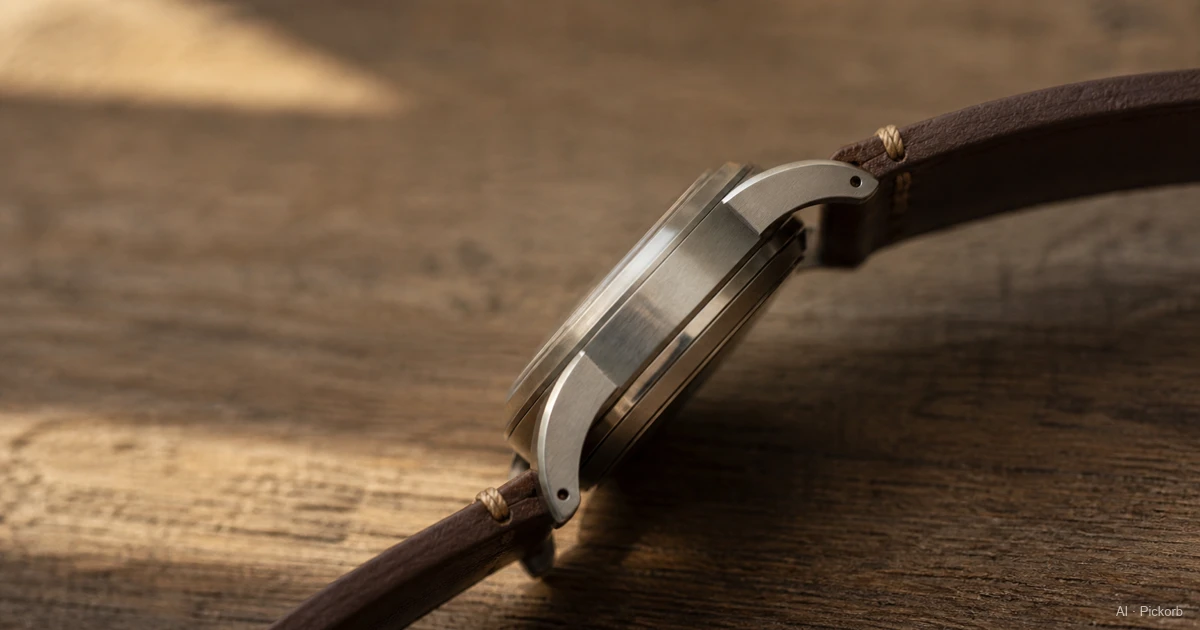
Lug-to-lug (often written L2L) is the distance from the tip of the top lug to the tip of the bottom lug — the full vertical length of the watch as it sits on the wrist. This is what determines overhang (Why Lug-to-Lug Is the Spec That Really Matters, Oracle of Time).
A 38mm case with long, straight lugs can have a 50mm lug-to-lug. A 42mm case with short, curved lugs can have a 46mm lug-to-lug. The 42mm watch will sit better on a 17 cm wrist than the 38mm one, despite the larger case number.
Rough lug-to-lug guidance:
- Under 6.5" wrist (under ~16.5 cm). Stay below 47mm L2L.
- 6.5-7" (16.5-17.8 cm). Stay below 48mm L2L.
- 7-7.5" (17.8-19 cm). Up to 50mm L2L works.
- 7.5"+ (19 cm+). 50-54mm L2L is comfortable.
L2L is usually listed in the spec sheet but not as prominently as case diameter. When in doubt, ask the brand or check a reference review — almost every modern watch's L2L is documented somewhere.
4. Thickness — the spec that decides cuff comfort
Case thickness decides whether the watch slips under a shirt cuff or pushes the cuff out of the way.
Under 9mm. Very slim, classical dress watch territory. Sits flush under a dress shirt cuff.
9-11mm. Slim-to-moderate. Most modern dress and three-handed sport watches sit here. Comfortable under most cuffs.
11-13mm. Standard modern sport watch range. Slips under most cuffs but begins to read present on the wrist.
13-15mm+. Diver or chronograph territory. Will not slip under a fitted dress shirt cuff. Designed to be seen.
A thick watch can be the right choice deliberately — diving and tool watches are meant to be present — but thickness is what most people underestimate when they only look at case diameter on a website.
5. Strap or bracelet adds a half-step
The same case sits differently on a thin leather strap, a NATO, and a steel bracelet. A 40mm sport case on a steel bracelet reads about half a size larger than the same case on a slim leather strap, because the bracelet adds visual weight along the entire wrist.
A first-time watch buyer at 17 cm wrist will typically be most comfortable in this combination:
- 38-40mm case
- 46-48mm lug-to-lug
- 10-12mm thickness
- Leather or NATO strap to start; steel bracelet adds presence
Quick reference
A fast lookup, not a rule:
- Wrist <16 cm. Case 36-38, L2L ≤47, thickness ≤11.
- Wrist 16-17 cm. Case 36-40, L2L ≤48, thickness ≤12.
- Wrist 17-18 cm. Case 38-42, L2L ≤50, thickness ≤13.
- Wrist 18-19 cm. Case 40-44, L2L ≤52, thickness up to 15.
- Wrist 19 cm+. Case 42+, L2L up to 54, thickness flexible.
Use case diameter as the first read. Use lug-to-lug to confirm whether the watch will overhang. Use thickness to confirm whether it slips under a cuff. If two of the three are comfortable on your wrist, the watch will usually be the right size.
Sources
- Wrist Watch Sizing Guide, Vaer Watches — case diameter and wrist size matching
- Why Lug-to-Lug Is the Spec That Really Matters, Oracle of Time — lug-to-lug as the determining overhang spec
- Watch Sizes Explained, Watches Fanboy — modern case diameter conventions across categories
How this guide was built
This piece is a cross-brand sizing guide, not a brand recommendation. The case diameter, lug-to-lug, and thickness ranges are cross-checked across publicly available watch sizing references, including Vaer's wrist watch sizing guide, Oracle of Time's lug-to-lug guide, and Watches Fanboy's case diameter reference. The wrist-to-case matching reflects what most buyers find comfortable after living with each size for a few months, not a single brand's chart.
Chexlow topic editor · AI illustration disclosed in image alt text